
Text by Ashley Shaw
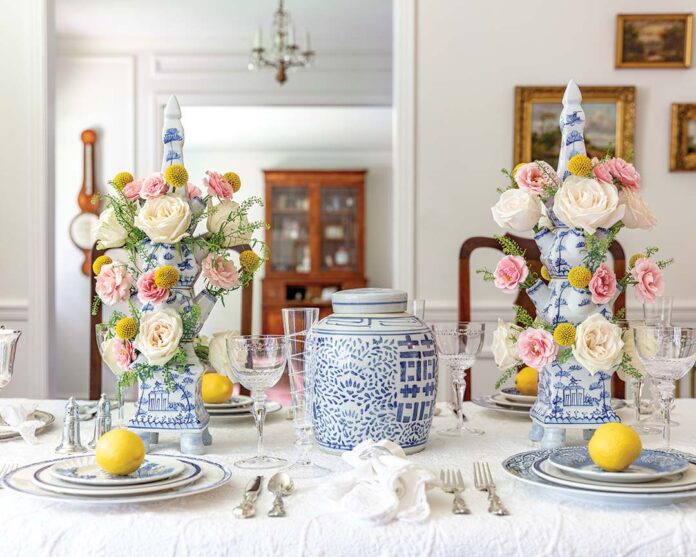
Once rare crowning jewels in royal and wealthy households, statuesque tulipieres laden with flora are gaining prominence in everyday homes. The style and availability of the shapely vessels first fashioned to nurture tulips have broadened to suit myriad tastes, inspiring new ways to enjoy the towering old-world treasure and modern variations.
“The point of the tulipiere will always be to show off the most spectacular blooms,” says Martha Whitney Butler, an antiques dealer and floral designer who owns The French Potager in Bay Saint Louis, Mississippi. “We typically stick with selling the classic blue-and-white stackable pagoda version. It’s a timeless look, and it never goes out of style.”
Inspired by fine handmade ceramics from Asia, 17th-century craftsmen of Delft, Netherlands, put their distinctive stamp on earthenware production with a tin-glazing process and a blue-and-white palette. During the same era, the demand for exotic and expensive tulip bulbs gave rise to ornate multitiered delft vessels outfitted with tubular spouts that share a water reservoir. The tulipiere was devised not only to grow the prized bulbs but also to flaunt them.
“They were absolutely a status symbol,” explains Martha, who traveled across Europe growing up with her antiques-savvy parents and studied floral design in the Netherlands. “A lot of people had invested their fortunes into these bulbs of hybrid varieties of tulips that people were going crazy for.” Historians refer to one extravagant yet short-lived boom in the Dutch flower market during the 1600s as tulip mania. “It was an elite class of people who were involved in this type of trade, and that’s who would own the tulipiere,” Martha says.
Today, easy access to abundant fresh flowers has opened the door to fashioning arrangements of all kinds in the distinctive container. “The thing is, tulipieres are almost self-arranging. You can’t not do it well,” says Dorothy McDaniel, who has been in the floral business for more than forty years in Birmingham, Alabama. “Now, people use them primarily for displaying cut flowers.”
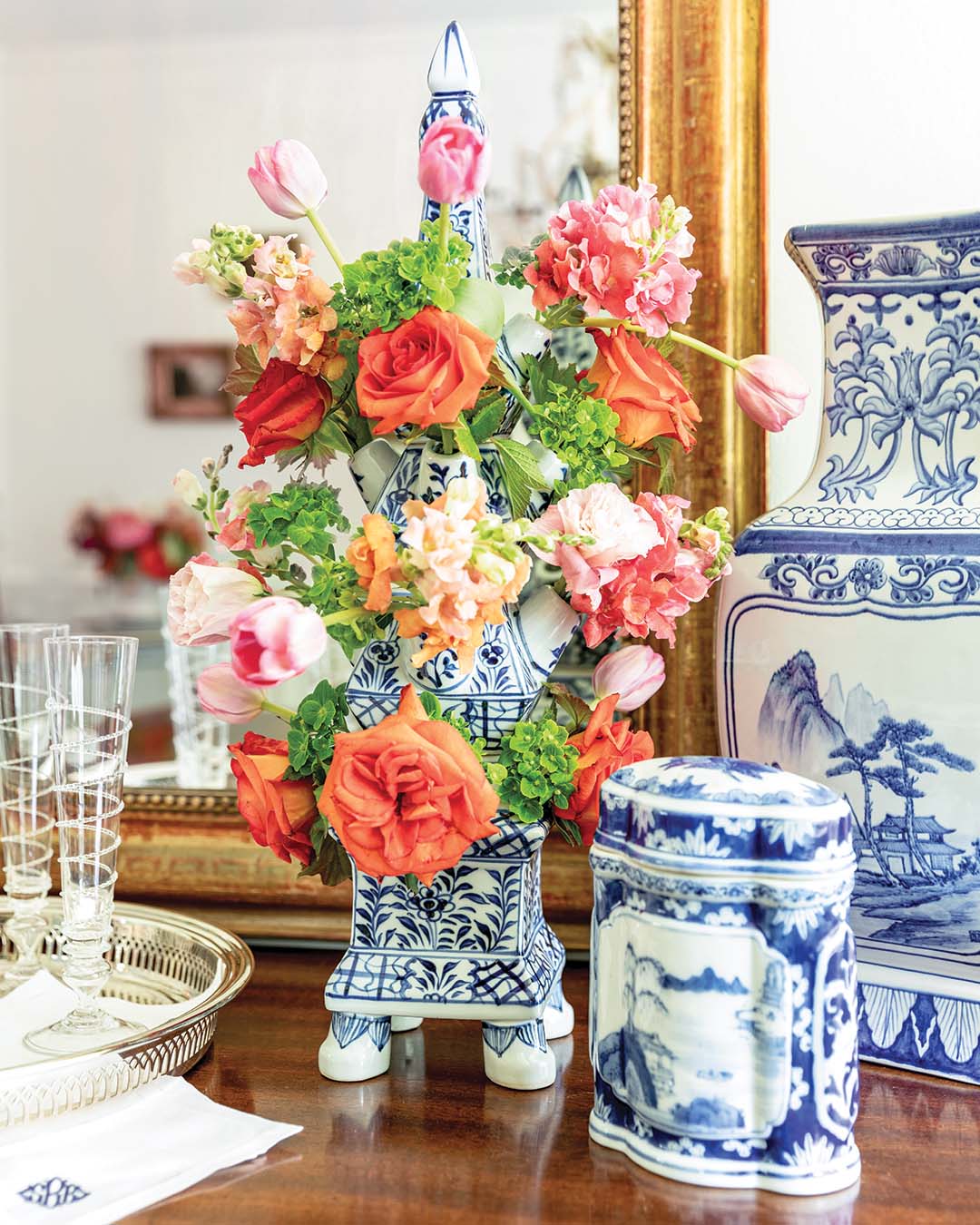
When tucking in tulip stems, bear in mind that these beauties continue to grow in water. “I recommend cutting them pretty short to let them keep growing over the next few days,” Martha says. She suggests adding flower food to each layered reservoir and changing the water regularly to make maintenance easier, as the tulipiere’s nooks and crannies can be difficult to clean.
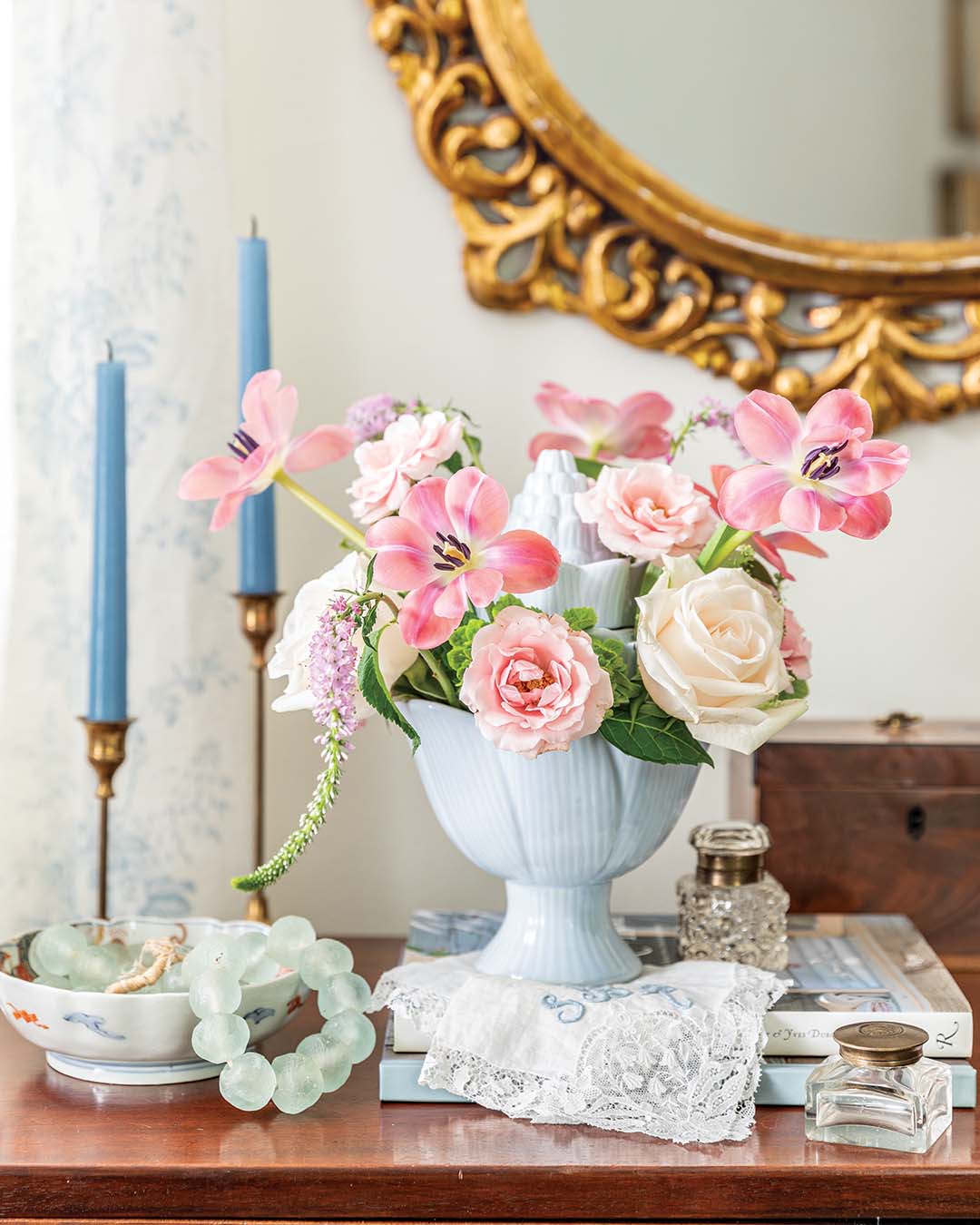
You can find affordable tulips in a range of varieties and colors at florists nearly year-round, Dorothy says, but she encourages creativity as well. “We’ve done peonies, one in every other hole, and used dusty miller to fill the rest,” she says. At her shop, Dorothy McDaniel’s Flower Market, she carries shorter contemporary variations of the vase in solid hues. Martha suggests hyacinths as another alternative. “It’s a fuller look, and they put out a great fragrance,” she says.
For traditional tulipieres, Martha’s advice is to let the tapered nature of the piece be your guide. “Keep larger focal flowers concentrated around the base so you don’t overwhelm the peak. As you work up, use smaller flowers. You don’t want to lose that beautiful shape or blue-and-white pattern,” she says. It’s rare for Martha to stock true antique delft tulipieres in her shop, but the chinoiserie collection by home décor enterprise The Enchanted Home is among her best sellers.
Even empty, these artful accents bring elegance to any space. But adorning them with flowers sparks a special kind of bliss. “You can go to a grocery store for flowers to fill it and still be so happy with it,” says Martha. “It’s an investment piece that you will find joy in filling.”