
Text by Bethany Adams
Carrie Pittman Hill grew up surrounded by creativity. “My mom was always creating in our home—she was always creating beauty,” says Carrie, who remembers her mother constantly finding uses for things that were left over. “She loved to use things in unconventional ways; and so, I think I just organically grew up with that.”
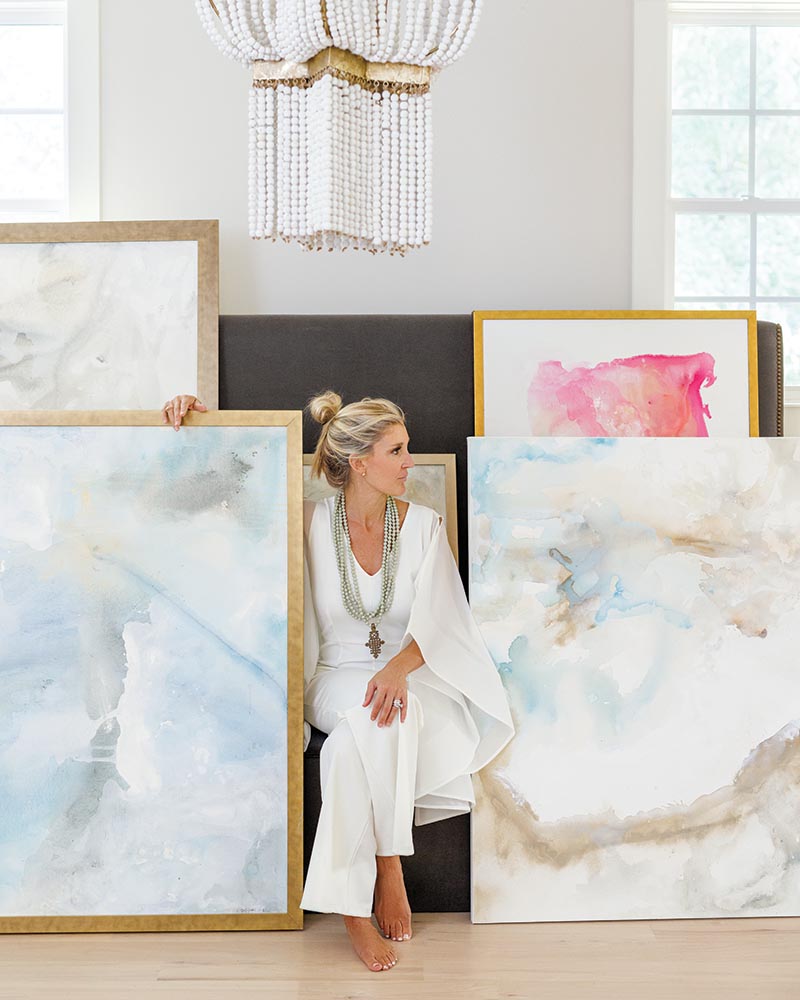
Decades later, following a career in finance and banking that left her yearning for an expressive outlet, Carrie rediscovered her creative roots. “The truth of it is, I went through a severe disappointment in my life,” she says, “and I felt like the only thing that made me feel better was painting.”
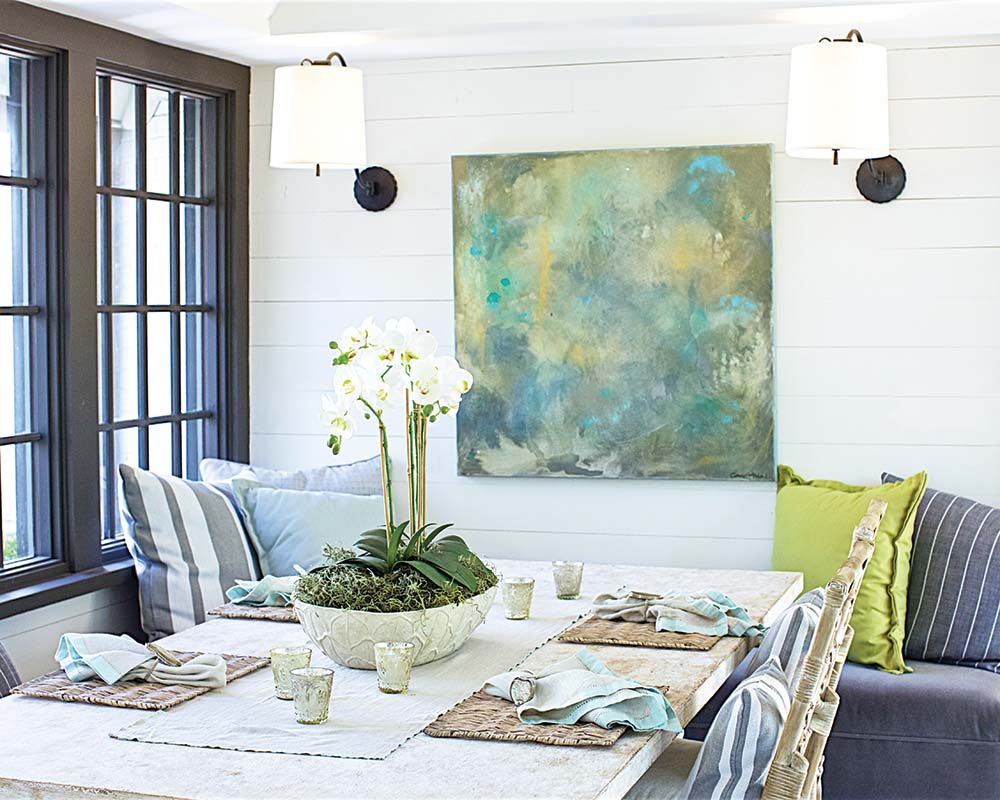
Carrie started painting in the evenings and on the weekends, using whatever she had at home—including nail polish and glue—but never intending for anyone to see her work. “It just gave me peace,” she says. “It gave me joy; it gave me a sense of purpose.” She spent the next two years using her paintings as a healing process while still working her day job, but eventually, it became clear that she needed to take the leap into being a full-time artist.
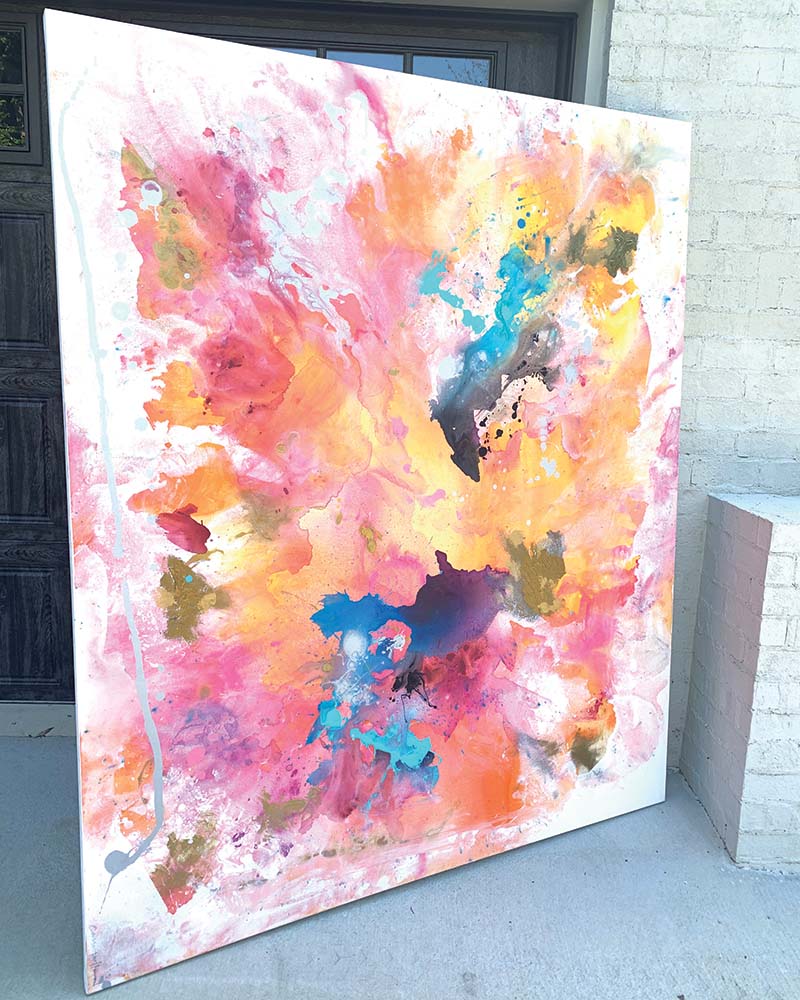
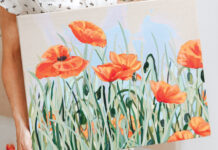
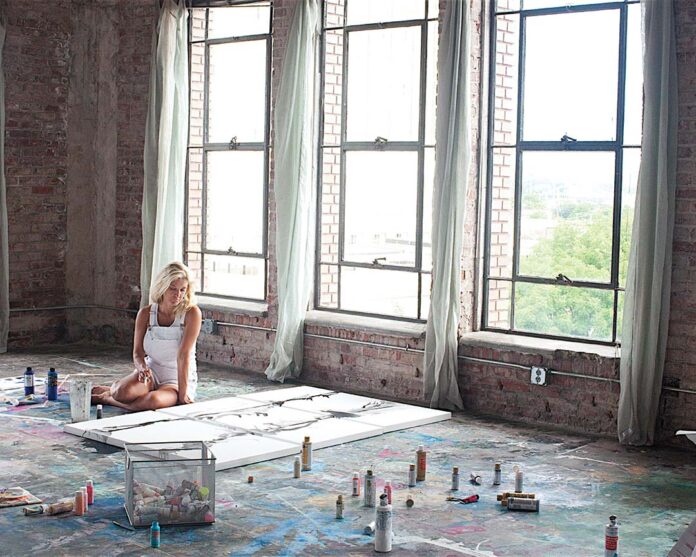
Carrie now works out of her studio in Birmingham, Alabama, and her work can be found in homes and galleries across the Southeast, still featuring the style that she describes as “abstract but intentional.” Though, these days, she’s no longer turning to the pantry for supplies, she does use traditional materials in an exploratory way.
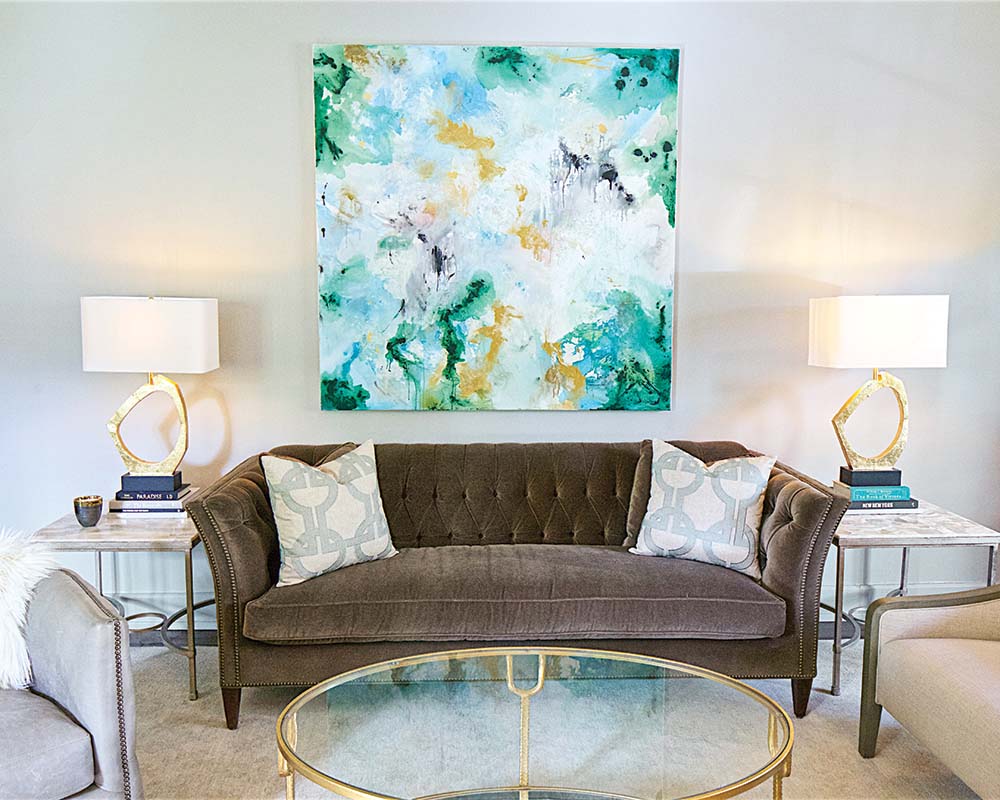
Utilizing everything from acrylics and watercolors to pencils and chalks, she lets the interplay of color and texture, rather than any concrete concept, inspire her work. And while her pieces are abstracts, they’re not without purpose or intention. Referring to any work that ends up in a client’s home, she says,“I want it to fill a space with them spiritually and emotionally, not just physically.”

Carrie says that, whether her work brings peace, excitement, joy, or another emotion, she prays that whatever first draws a person to her art will remain and resonate with them—much as it has with her. Because, years after rejoining the creative world, Carrie still says, “I feel more myself when I’m painting than any other time.”
For more information, visit carriepittman.com.