
Text and Photography by Tovah Martin
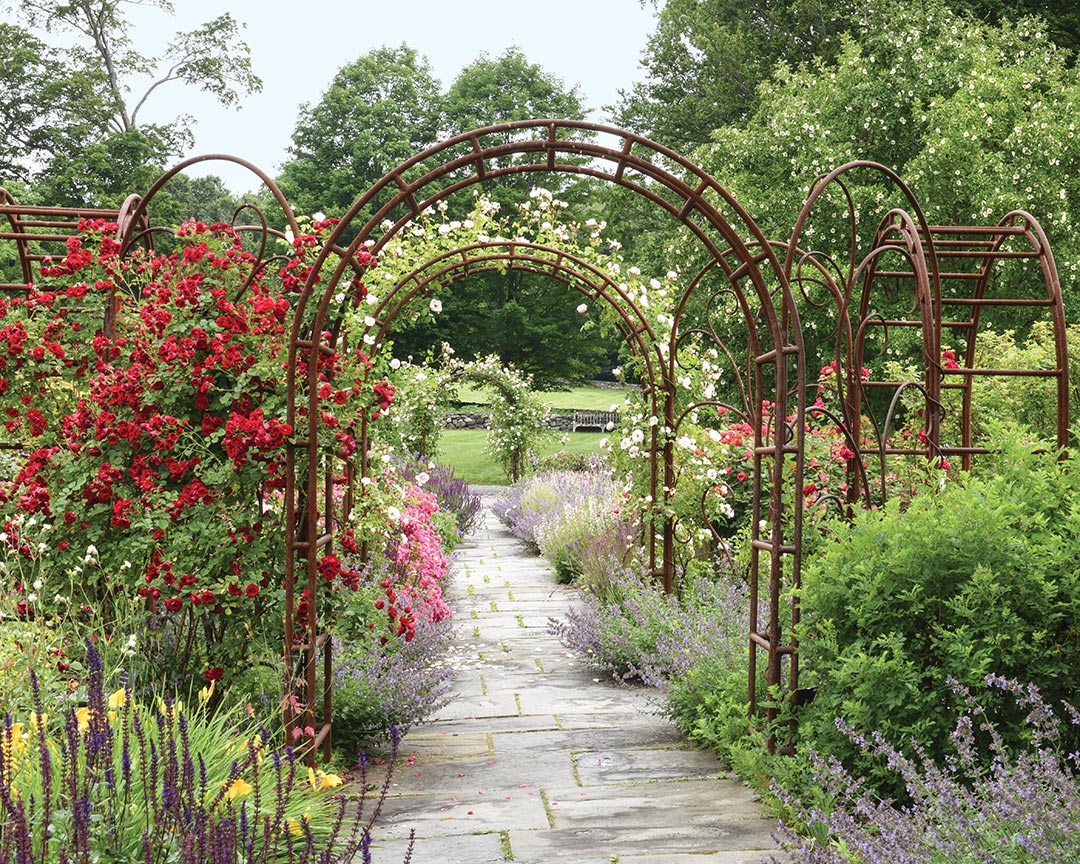 The vision of a “Roses & Friends” garden sprouted in 2018. The White Flower Farm team selected the best roses that bloom over a long period while featuring disease resistance, but the staff also wanted to explore their ability to play well with other perennials. Beyond a rose monoculture, copacetic perennials flow all around, extending the flowering period and enhancing the scene. The diversity of those botanical buddies helps to keep the roses healthy while also adding a thrilling element. As it turned out, roses love living in a diverse neighborhood.
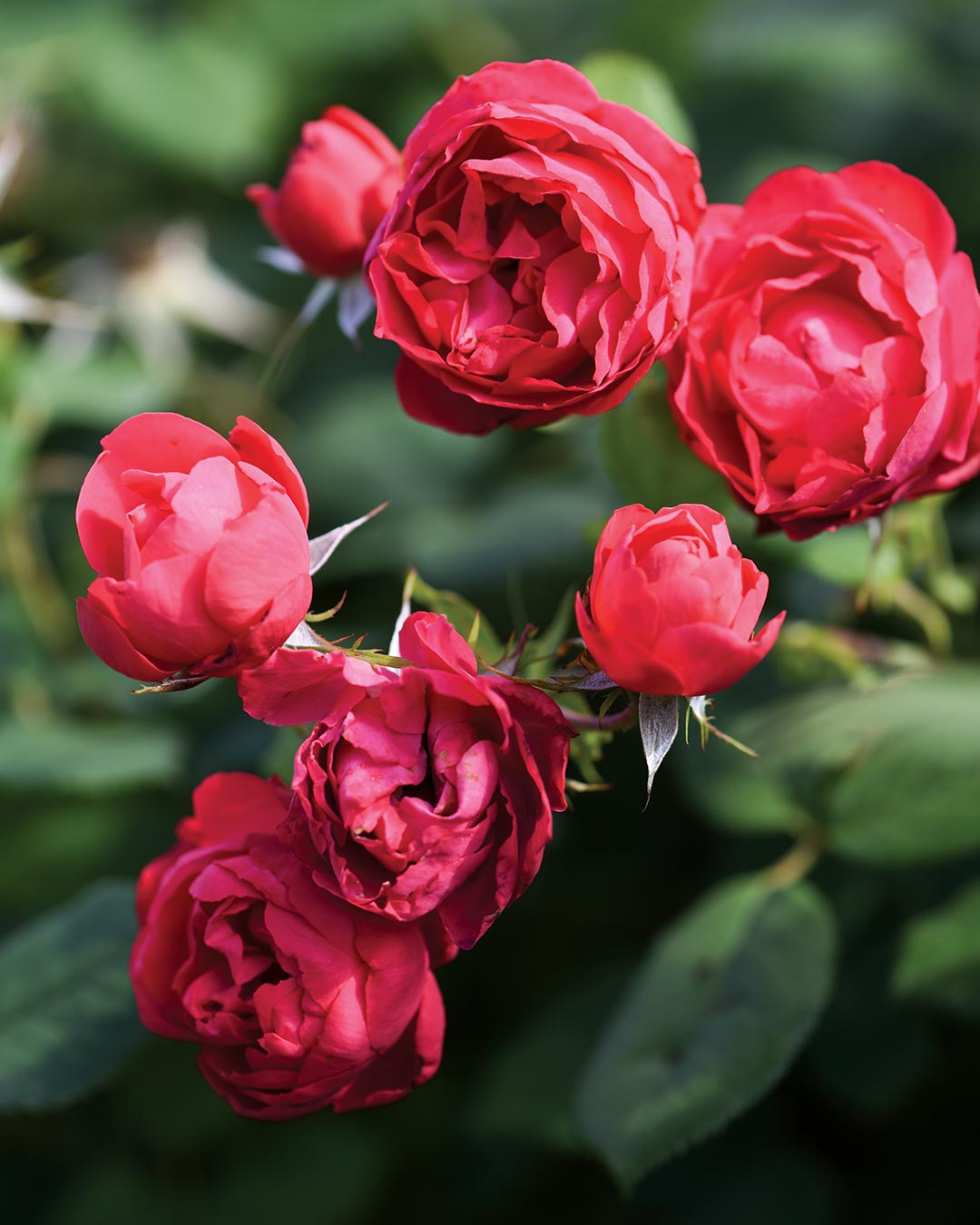 Even if you didn’t know that a rose garden crests the hill behind White Flower Farm’s Morris, Connecticut, nursery, you would suspect. The perfume wafting down to the shop is a definite giveaway. Just footsteps from the parking area, rose blossoms spill right and left, clamber up arbors that arch overhead, and mingle with colorful bedfellows designed to extend the season through autumn’s denouement.
White Flower Farm’s co-owner, Eliot A. Wadsworth, knows the landscape at White Flower Farm intimately, having grown up “wielding butterfly nets, catching frogs, and generally bumping up against nature” from the family home in the middle of the 10-acre display garden site. Gardens were always part of the nursery’s lure, stretching back to the 1950s, when William Harris and Jane Grant (both colorful figures in New York City’s literati scene) first adopted the land as a summer retreat. And ever since his dad, Eliot Wadsworth II, bought the nursery in 1976, the younger Eliot has watched while varied gardens were installed—but a rose garden was never included. When a shrub border cresting the hill outgrew its usefulness, the White Flower Farm team saw the opportunity to let roses reign.
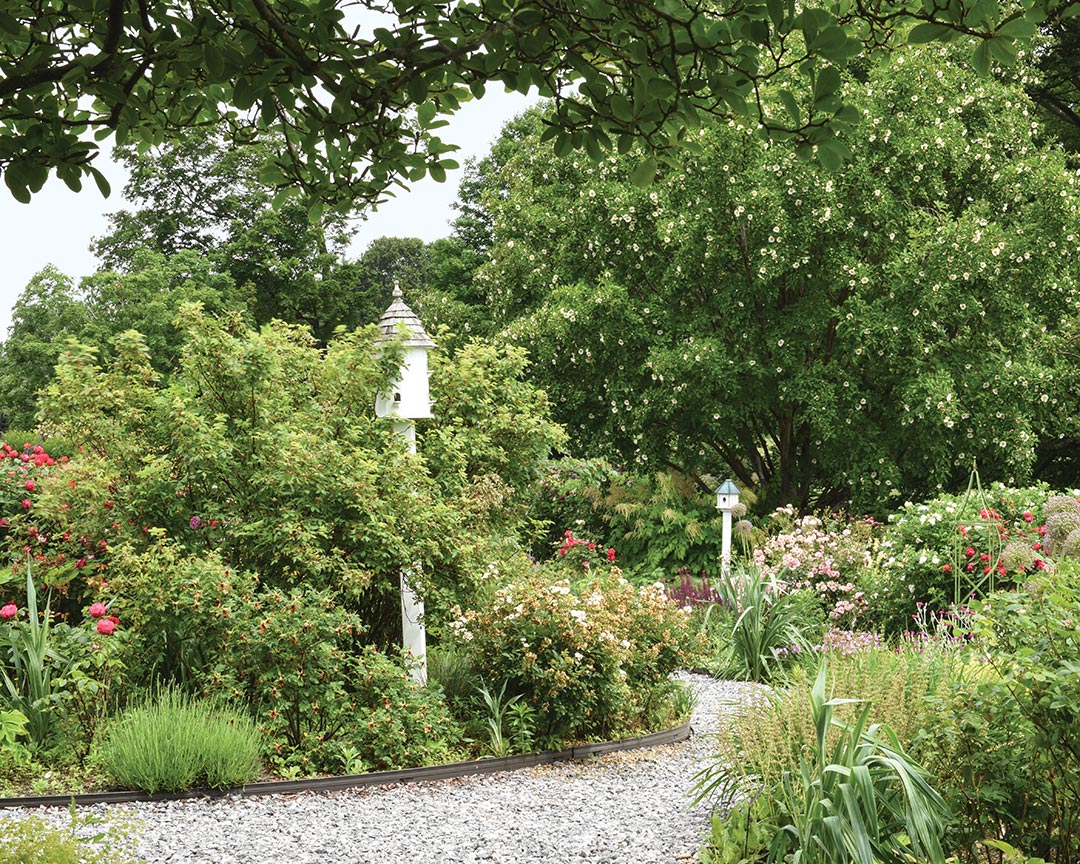
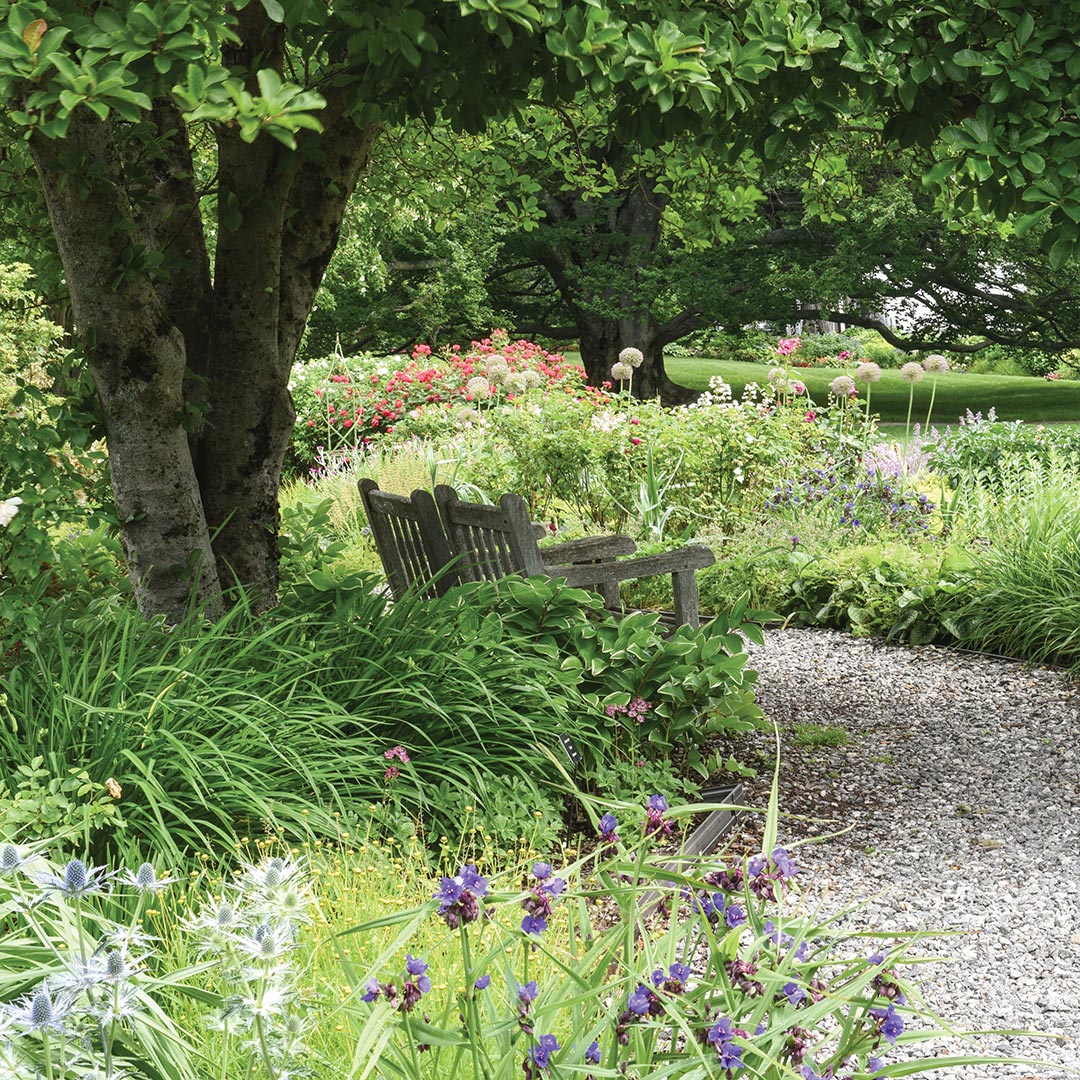
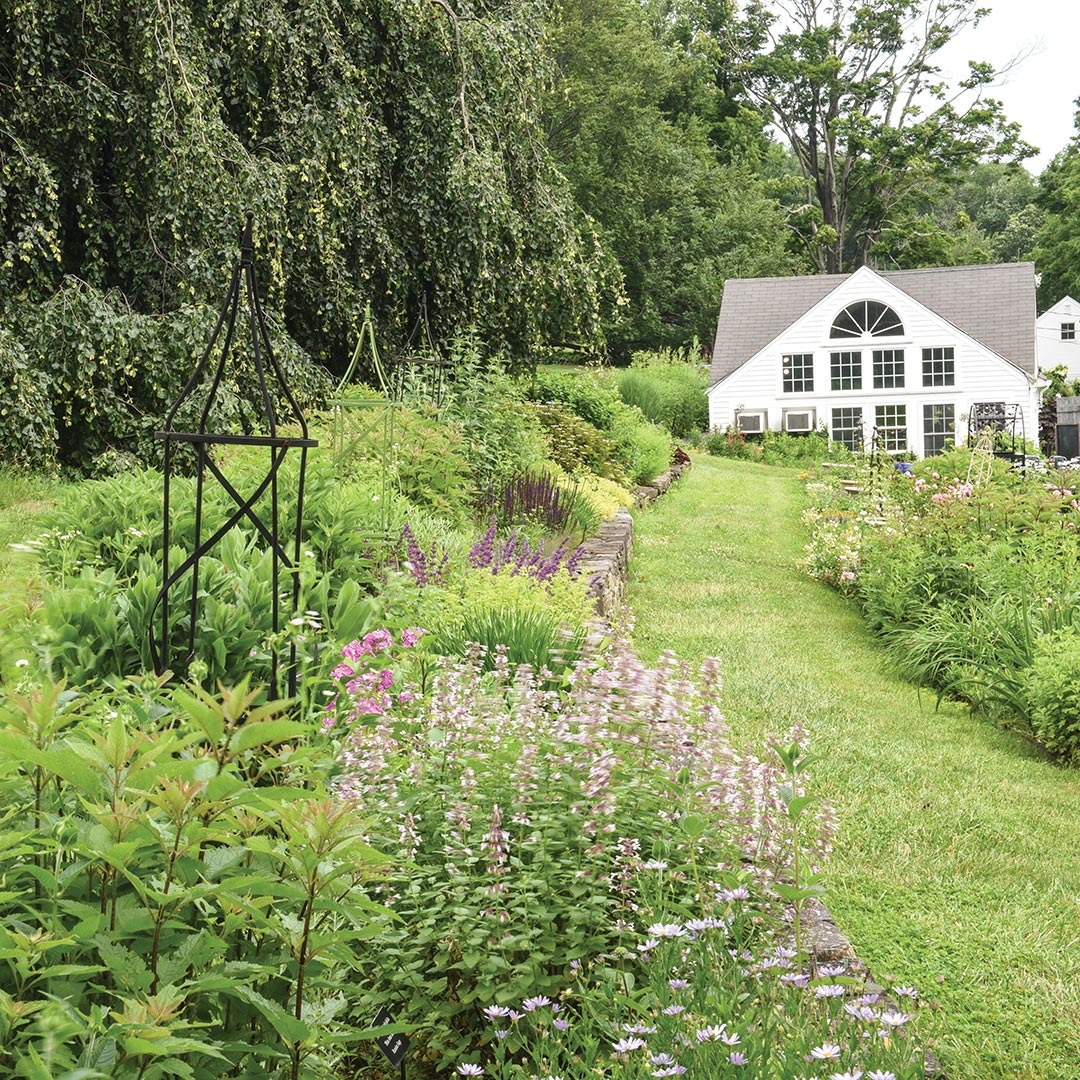 With decades of experience as head gardener at White Flower Farm, Cheryl Karpeichik has seen it all. She knows the challenges involved with roses but is committed to bringing these sumptuous blossoms within reach without threatening the broader ecological web. From the start, perfection was not a goal. As Eliot puts it, “A rose garden is not always puppy dogs and rainbows.” A few nibbles, chewed foliage, and some leaf drop are tolerated. The goal is to create a space where imperfection is worthwhile, and then some.