
Text by Holly Seng
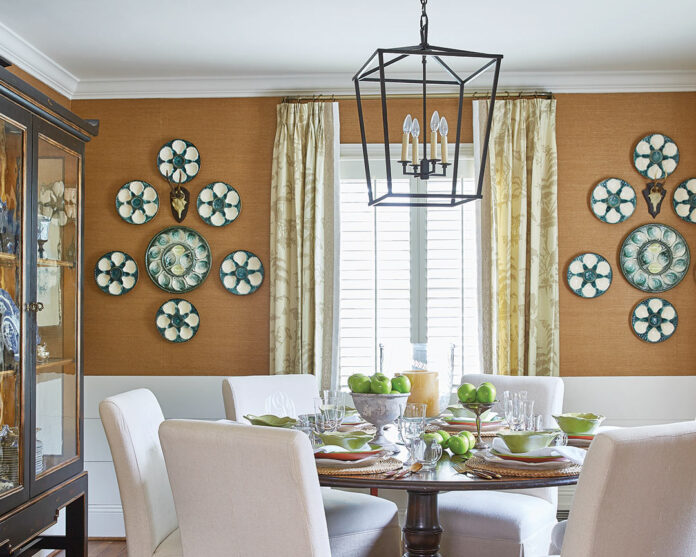
Before they adorned accent walls of today’s collectors, these tabletop beauties showcased shucked oysters in all their splendor.

Fashionable form and function were closely intertwined in the Victorian era as sophisticated table settings served a dual purpose of displaying wealth through the elaborate serveware specifically designed for particular foods. Oyster plates were one such commodity, and their appealing aesthetic continues to capture the hearts of collectors over a century and a half later.
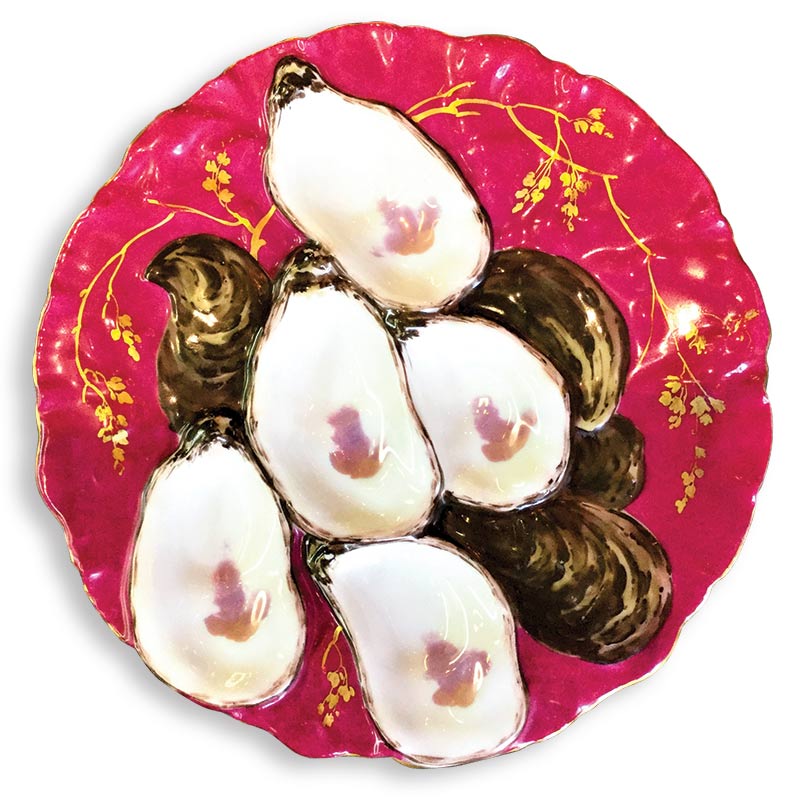
No detail was overlooked in their production, as there were a variety of options available—from those with shallow wells reserved for shucked oysters to their deeper counterparts that allowed for the delicacy to be served in the half-shell with ice. However, the shallow wells proved to be the more desirable choice, since the shell’s rough edges caused damage to the elegant plates.
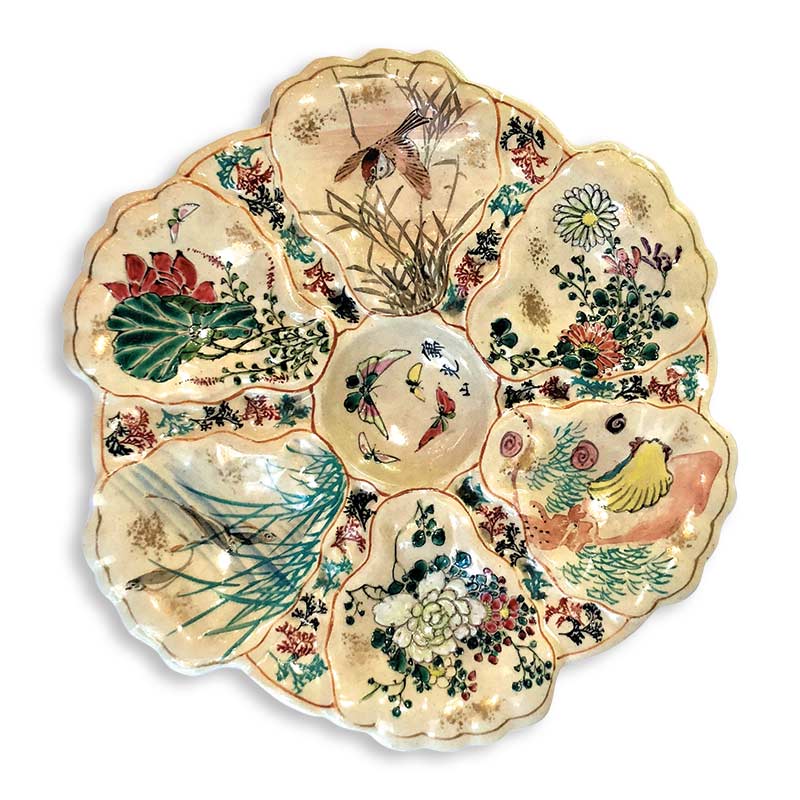
Reaching the height of their popularity in the mid-1800s, these prized heirlooms were produced by Haviland & Co. in France, Union Porcelain Works in New York, and Minton in England, as well as other notable manufacturers. While glass and silver made an appearance, the majority of oyster plates are porcelain or pottery, with hand-painted Limoges and majolica being the most highly sought after.

When curating your collection, one thing to consider is the shape of the plates. There are three main categories: geometric, turkey, and kidney. The geometric shape usually consists of six wells with a seventh smaller well at the plate’s center used to hold slices of lemon or an accompanying sauce. The turkey shape includes five wells, and their unique positioning takes on a turkey-like appearance, hence the name. Similarly, the kidney shape features five wells, and the plate’s overall silhouette hints at its namesake.
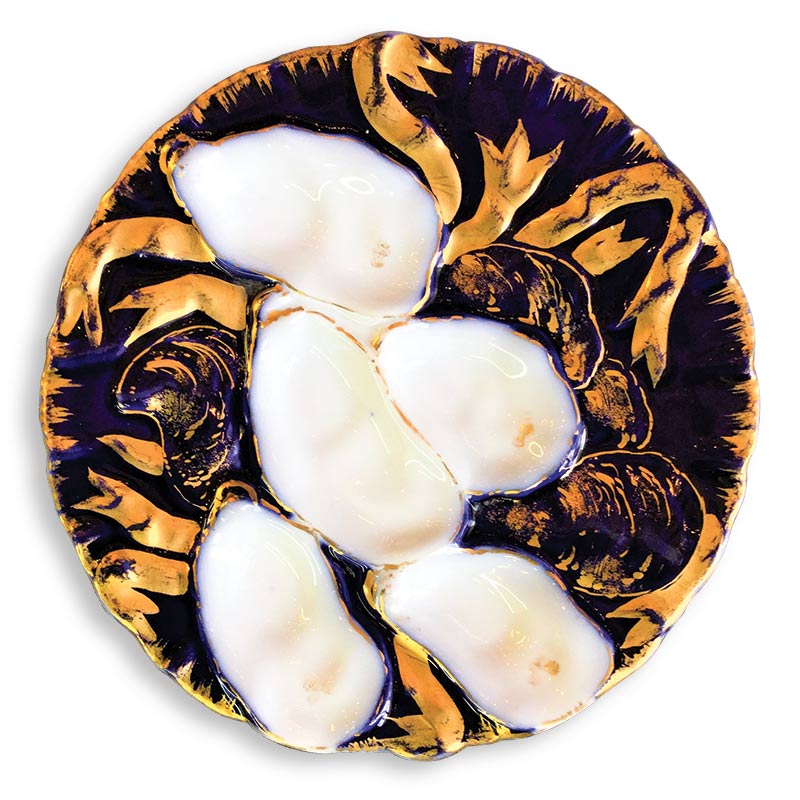
With pastel palettes and vibrant majolica varieties to choose from, many let the intricate designs adorning the plates fuel their inspiration for collecting. The hand-painted motifs run the gamut from floral to sea-inspired scenes. Though the end of World War I brought with it a more laid-back lifestyle, these extravagant keepsakes remain timeless as they infuse a dash of Gilded Age glamour to the modern home’s interiors.
![“I think my own personal style is a bit of French design [and] a little bit of English, but I just love that overly collected, curated, layered space that looks lived in and comfortable,” Paige says.](https://thecottagejournal.com/wp-content/uploads/2026/02/Photo-May-05-2022-2-46-08-PM_OTR-feat-218x150.jpg "Designer Paige Kontrafouris Layers Her 100-Year-Old Home with Collected Treasures")