

Text by Elizabeth Czapski
Admirers of antique charm love to pass down beautiful things from generation to generation, and linens have long been beloved keepsakes that carry on through family lines. But over time, these dainty accoutrements can get stained, damaged, and separated from full sets, leaving recipients wondering if they’re worth the storage space. We caught up with two expert linen aficionados for advice on how to make use of these pretties with just a little elbow grease and some creative spirit.

For Lois Lamb, owner of Vintage Linens by Lois, her love affair with textiles had a serendipitous start. Each week, Lois’s parents took her and her siblings on excursions to peruse flea markets—a tradition that continued into her adult years. During one of these outings, she purchased an antique cedar chest and later found it was brimming with sheets and pillowcases from Italy. Everything about them, from appearance to scent, entranced her and inspired her business.
“My imagination goes wild when I see a stack of lovely antique linens,” Lois says. “I have accumulated so many odd and damaged pieces over the years that have been repurposed into wonderful items.”
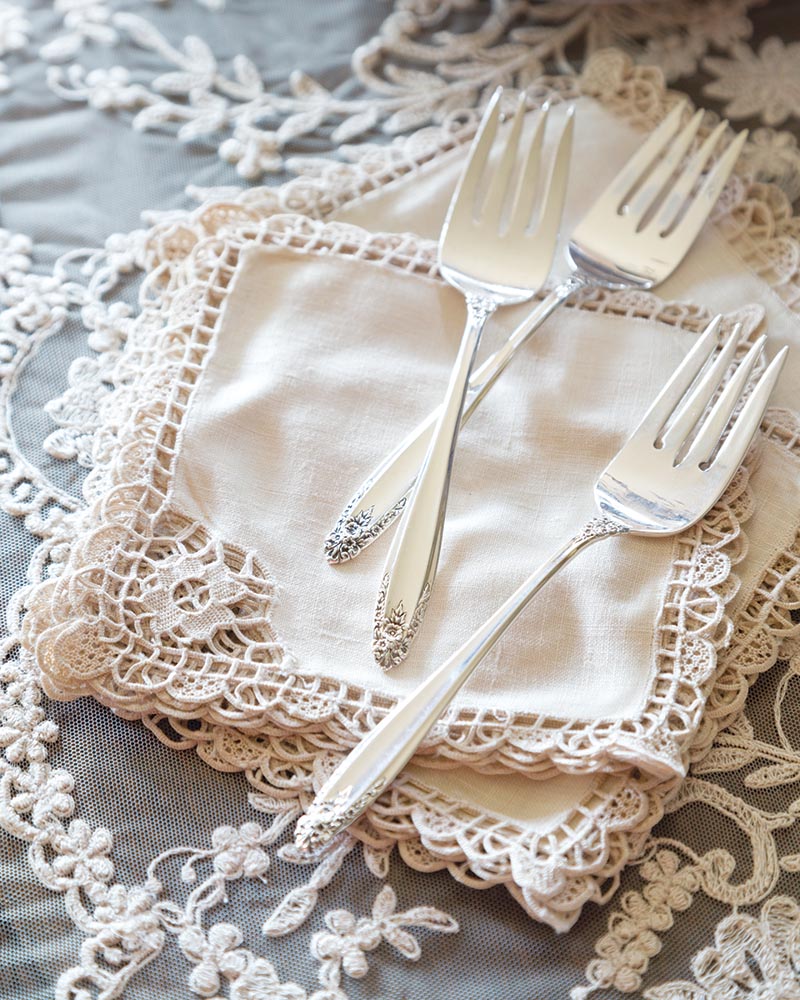
Based in Charleston, South Carolina, Lois has sold fine vintage linens and accessories at antiques and garden shows since 1985, offering products such as her signature lavender pillows made from napkins and damask, bridal lingerie bags fashioned with filet lace tablecloths, envelope shams that were once show towels, place mats turned fingertip towels, and much more.
“When my customers see the items at shows, they frequently donate their unwanted linens and laces so I can repurpose them,” Lois says. “It gives them great satisfaction to know the linens are being loved and used again.”
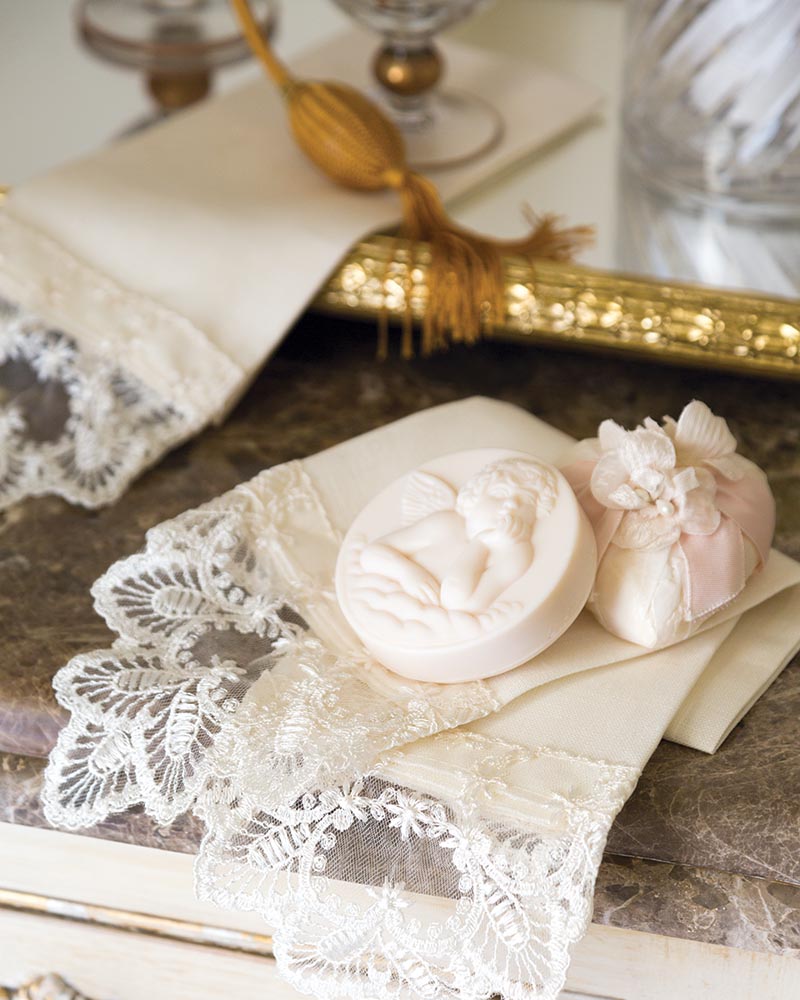
Through the years, Lois has noticed a special affinity in the South for her work. “Southern families treasure and appreciate the formality of antique linens and pass this down to each generation,” she says. “Many of my customers are younger Southern ladies who have been taught the tradition of using these treasures and continue to add to their collections. Southern brides love using antique tablecloths at their weddings and give antique hankies to their moms, grandmas, and bridesmaids as favors.”
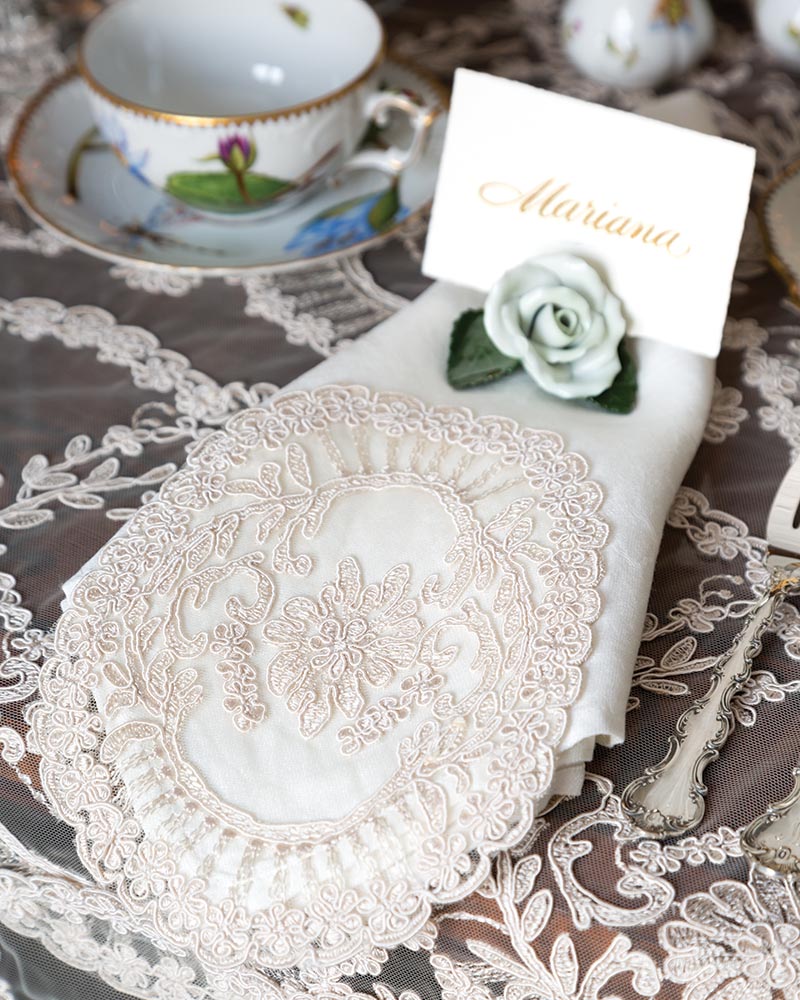
These time-honored regional customs created a market that allowed Shelly Heath, a retired middle school teacher, to start Southern Vintage Table. Based in Hillsborough, North Carolina, her company rents out antique tableware—including napkins, doilies, and tablecloths—for weddings and other events. “We specialize in mixing and matching patterns, colors, and styles for our clients,” Shelly says, a practice she recommends applying to your own home entertaining.
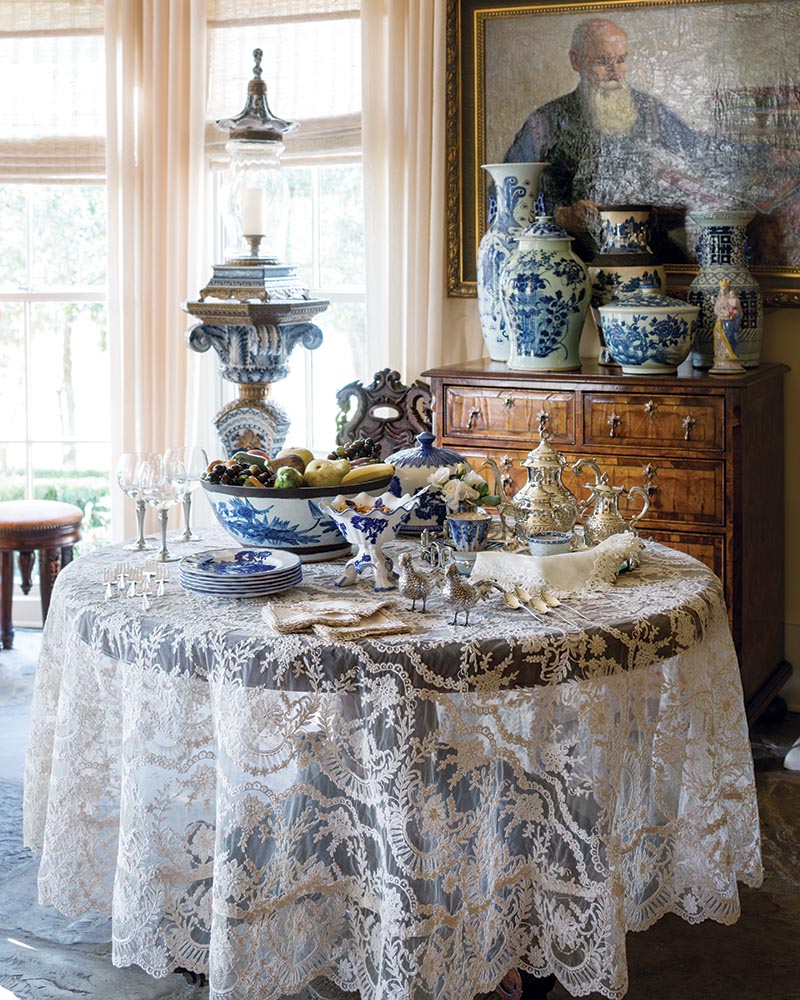
“As far as not having enough matching napkins, no worries,” she says. “Don’t be afraid to mix them up for your guests. Use several different patterns.” Lois echoes this sentiment, saying she frequently uses a distinct variety of linens at each place setting—from place mats to napkins to wine coasters. “It makes for a wonderful conversation piece, as everyone loves to see all the different settings,” she says.
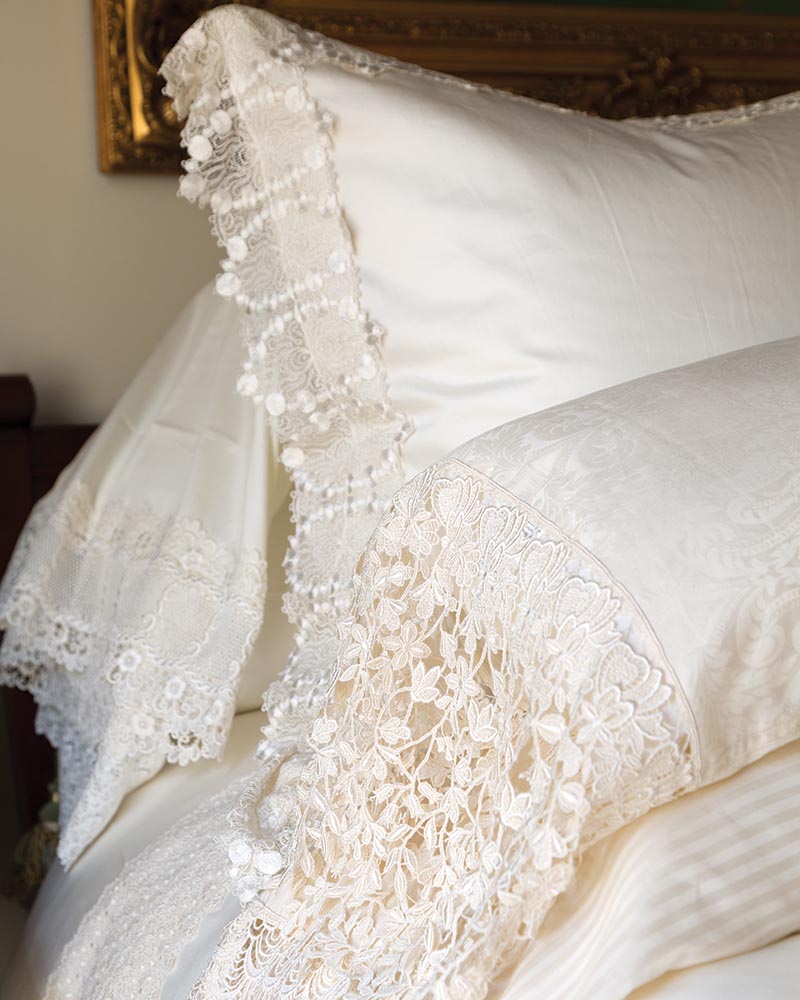
Both women agree that you should cherish heirloom linens for their aged appearance and storied imperfections, not in spite of them. “Embrace the history of the vintage linen,” Shelly says. “Little tears or holes need not be fixed—they represent a loved item.”
5 Creative Ideas for Incorporating Linens
1. Put Them on Display
“Vintage kitchen tablecloths are too beautiful to keep in the linen closet,” Shelly says. “Fold and place several in a basket or bin to create a pretty display.” You can also showcase napkins and doilies in a small basket, draping them artfully over the sides. Offer particularly striking handkerchiefs and petite doilies pride of place in a frame.
2. Decorate with Them
Lois uses sheets and runners to craft fancy valances. “A table runner can be doubled over on a rod and used on a bathroom window,” she says. “I use dental floss to create a scalloped effect. It’s very strong and blends into the linen.” She has also turned lace and damask tablecloths into shower curtains. “Just run a simple hem at the top to go over the metal rod,” she says.
3. Use Them in Entertaining
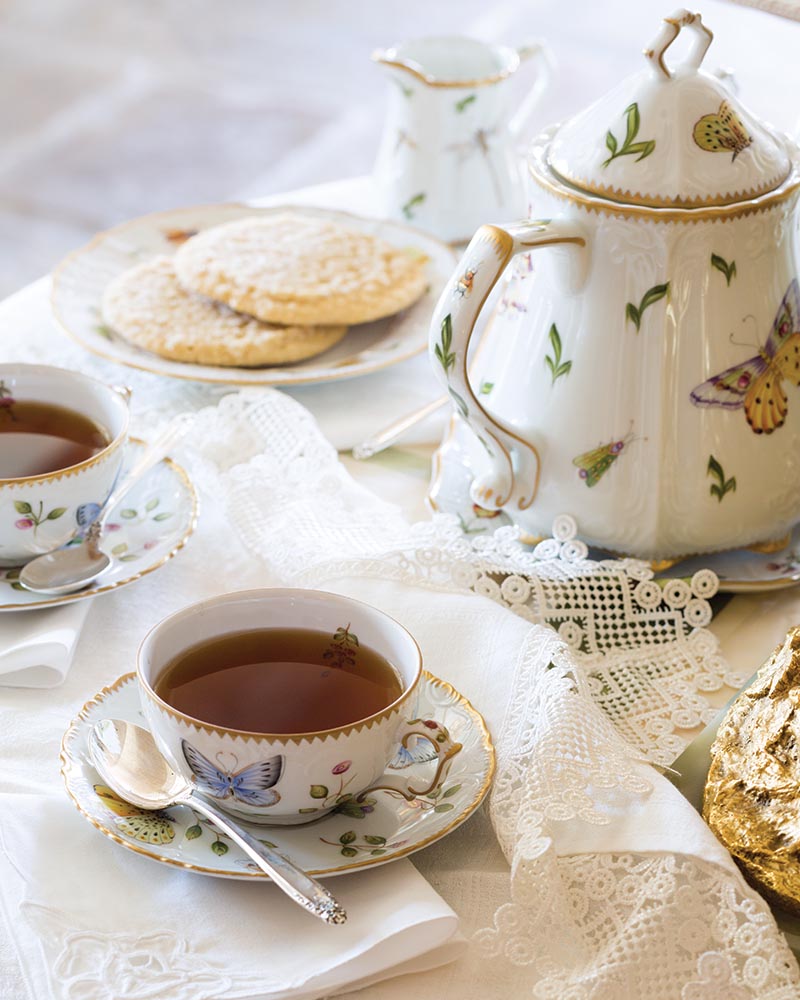
Shelly likes to fashion an eye-catching table runner by streaming doilies down its center. “They can either be placed on top of each other or lightly stitched together,” she says. If you don’t have a full set of matching napkins, set your table with several across a spectrum of the same hue and style them to accentuate their distinctive characteristics. “Roll up vintage napkins in different shades of white, cream, and off-white so the unique feature is exposed,” she says of a classic example. “Use ribbon, twine, or lace to tie them up.”
4. Put Them to Practical Use
Produce a fragrant air freshener by filling a hankie with lavender buds and securing the bundle with a ribbon. “I place these in my drawers and always have one in my suitcase to give my hotel room the lovely aroma,” Lois says. She also uses antique pillowcases, filled with a handful of lavender, to line dresser drawers and protect their contents from direct contact with wood. For both a functional and decorative touch, line the shelves in cupboards with lace runners and let the edges hang over about 1 inch.
5. Pass Them Down
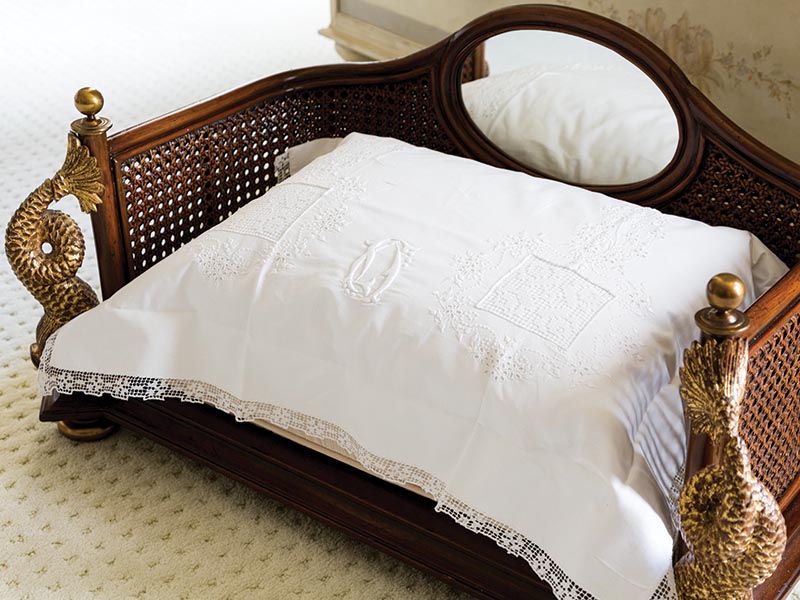
Lois recommends starting a hope chest of fine linens for children. She makes many mementos for childhood milestones, such as tooth fairy pillows, first haircut bags, baby bonnets from vintage petticoats, and christening dresses from lace tablecloths. It’s never too early to foster an appreciation for sentimental linens among the next generation.