
Text by Marie Baxley
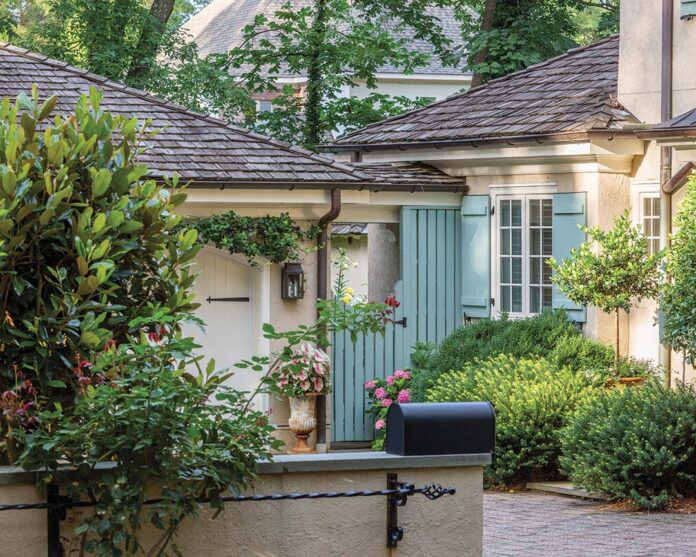
Breathing in fragrant floral scents or strolling through the circuitous wooded paths of Laura Hearn’s garden, you feel the sense of historic inspiration revived by a fresh outlook, thanks to her longtime collaboration with landscape architect Chip Callaway.
Unlike the Depression-era plan upon which it was based, Laura’s cottage-style plot brims with interest year-round, as inviting in February as it is in May when the colors and textures are a visual feast. “The thing I like most is the twelve months’ presence,” says Chip, principal of Callaway & Associates in Greensboro, North Carolina. “Even in the winter, it’s got strong form. It doesn’t have to be in full bloom for it to be a place you want to be.”
Laura, whose late husband Thomas K. Hearn Jr. served more than two decades as president of Wake Forest University, became enamored with the renowned 20th-century landscape design of Ellen Biddle Shipman after the couple moved into the grand Georgian-style structure known as Hanes House. Built in 1929 for textile magnate Ralph Hanes and his wife, DeWitt Chatham Hanes—who moved in during the infamous stock market crash that launched the Great Depression—it was donated to the school in 1988 for a president’s residence.
“It’s got a lot of history to it,” says Chip, who worked tirelessly with Laura in the 1990s to study the lush, flowing Shipman garden at Hanes House and recreate it. But the designer quickly put a damper on Laura’s request for an exact restoration. “I said, ‘Honey, Mrs. Hanes had a staff of seven. How many gardeners do you have?’ She said, ‘None.’” The Hanes family also spent summers in the mountains, leaving their garden to reach its peak of color in the spring.
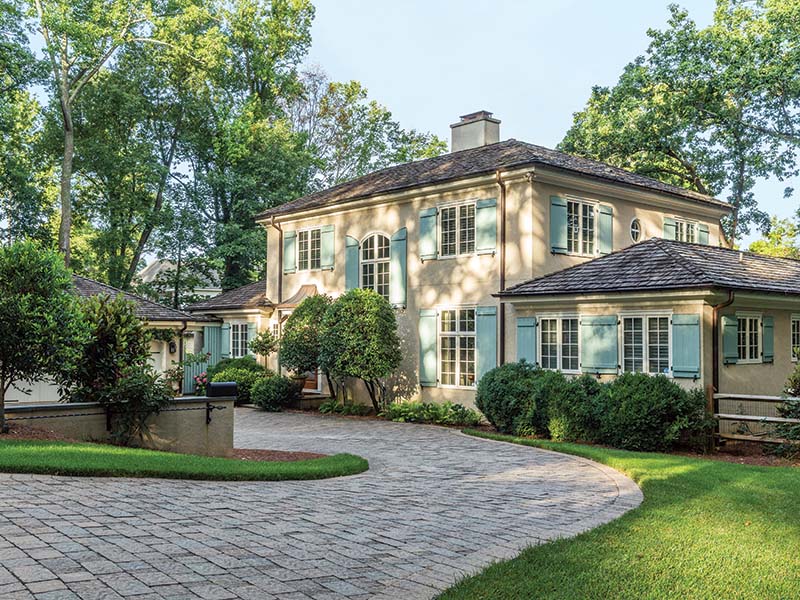
When Thomas retired as president, the university gave the couple a site adjacent to the Hanes House property to build their own home. Laura again made the Shipman blueprint her muse—albeit a much smaller version. Chip has ensured botanical selections and costs are manageable for the 21st century, and Wake Forest horticulturist Michelle Hawks oversees the planting and maintenance. “You try to keep the spirit of the garden, but not the enormous upkeep required,” says the architect, who often gives lectures about horticultural restoration.
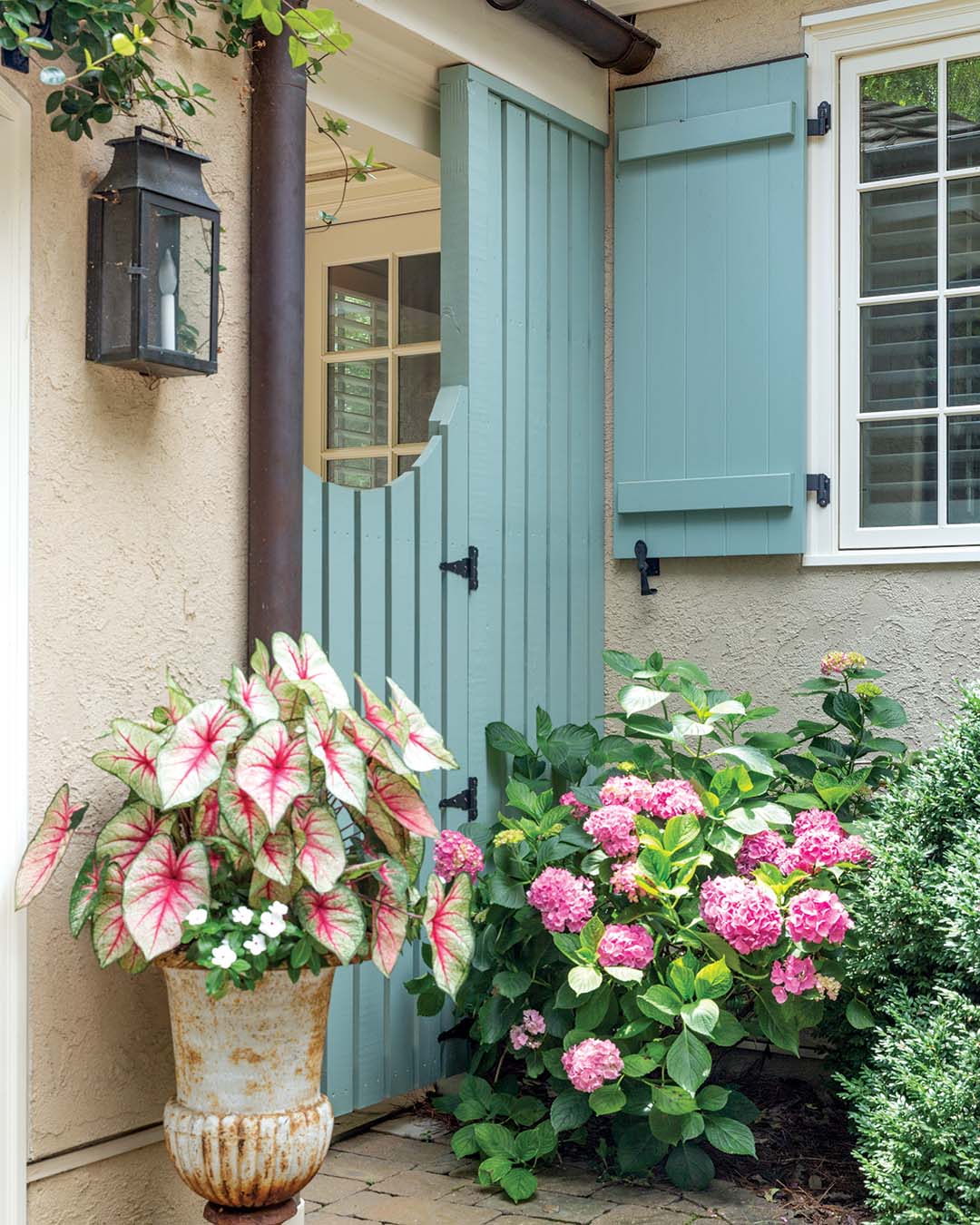
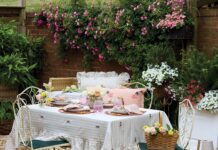
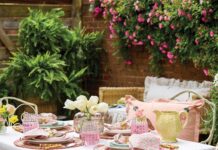
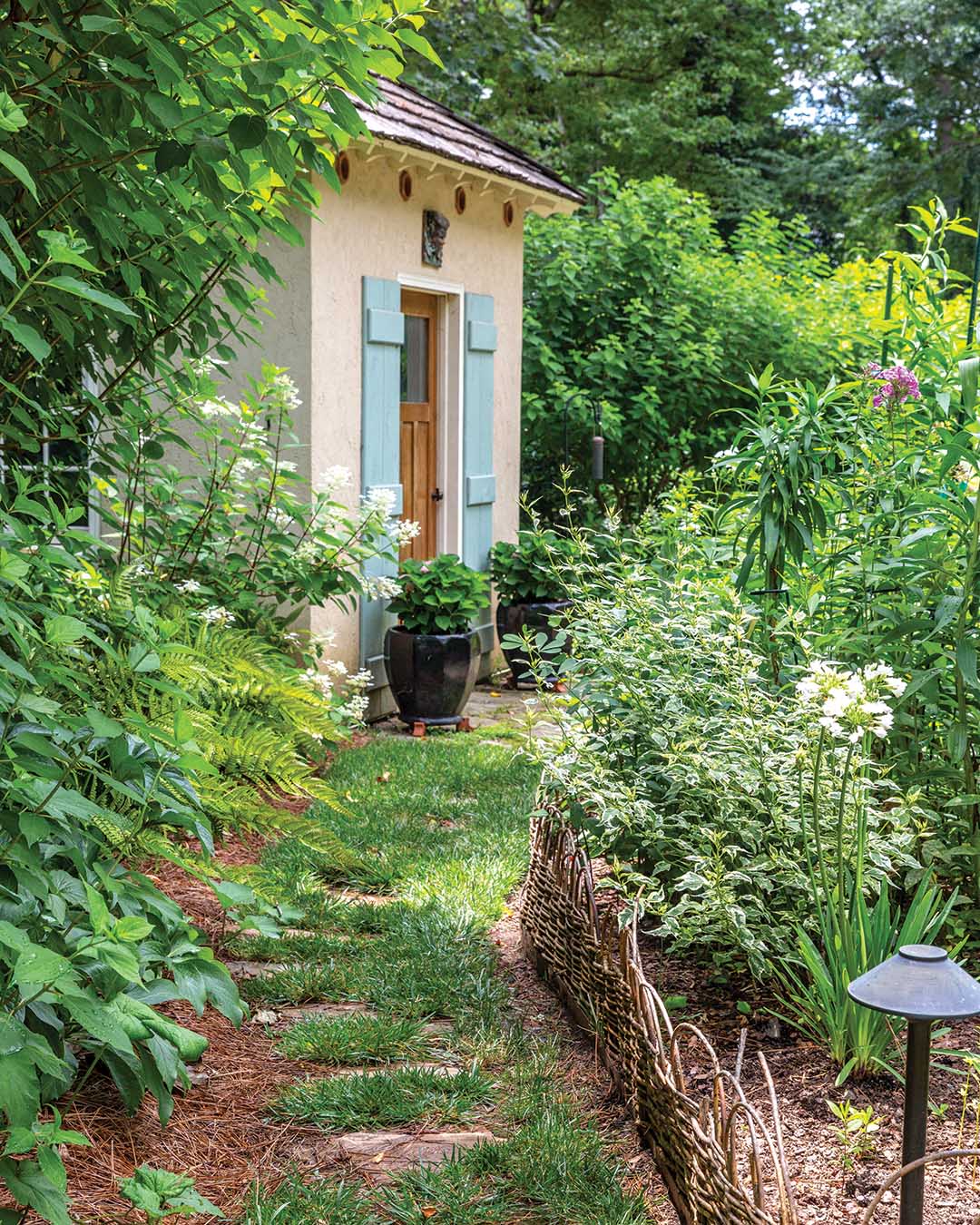
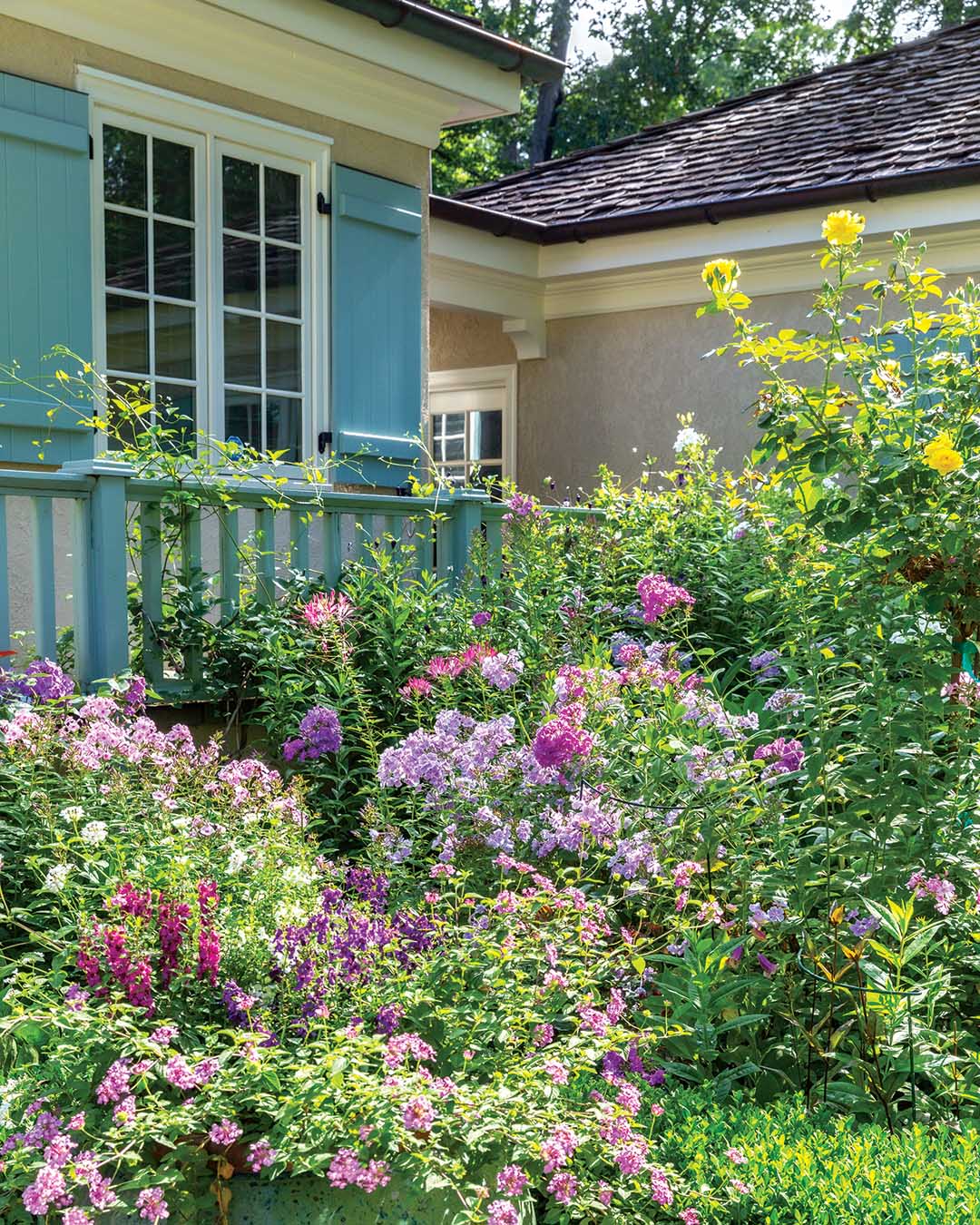
Stretching between the house and the potting shed, a lushly planted area provides a focal point from the kitchen, while an informal patio with Belgian block granite pavers and a parterre of English boxwoods serves as a gathering spot for family and friends. “I wanted that to be more of a living room to the house,” Chip says, noting it’s where Laura spends the most time. In addition to structural evergreens, favorite annuals and perennials offer a spectacular palette of blue, lavender, purple, pink, and white that echoes the Shipman plan.
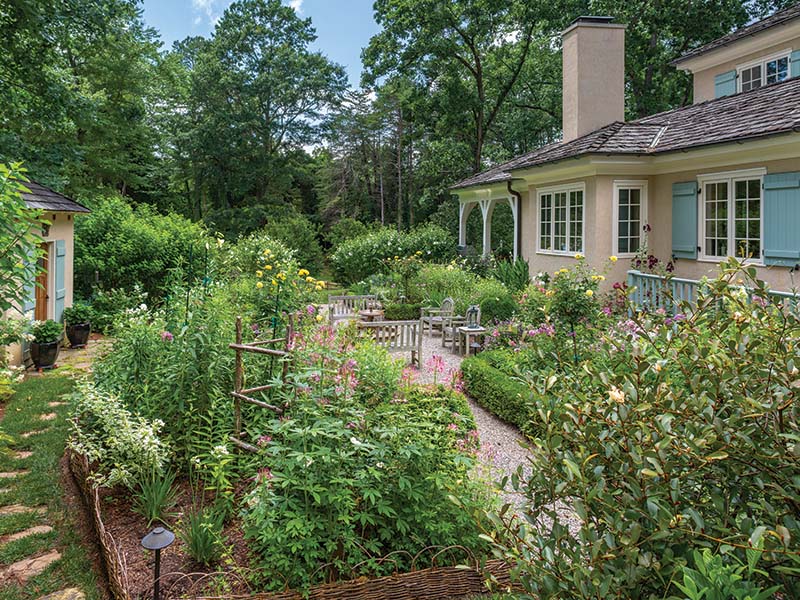
Chip views horticulture as a tremendous learning experience, because environmental factors such as fallen trees, a new pest, or climate change prompt swift adjustments. “A garden plan is a wonderful place to start, but a garden is a tough teacher,” he says. While plants vary year to year, staples in Laura’s yard include several varieties of phlox, verbena, Asian lilies, alliums, salvias, hibiscus, tree roses, and clematis.
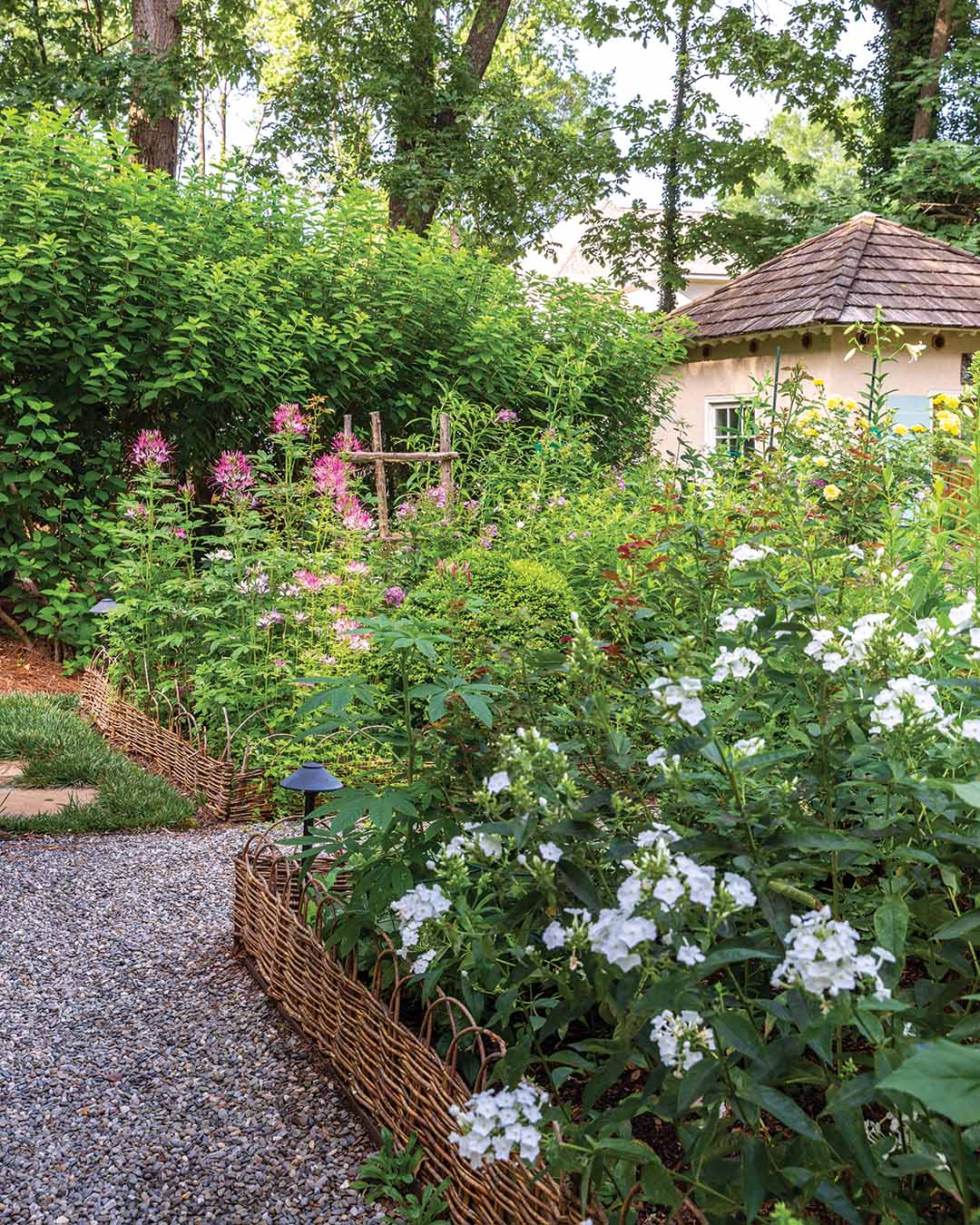
The compact space concentrates the blooms’ alluring fragrances. “You don’t have to have your nose up in a rose to smell it,” says Chip, who grew up in North Carolina and started out as a journalist in Atlanta until he switched gears to pursue a master’s degree in landscape architecture.
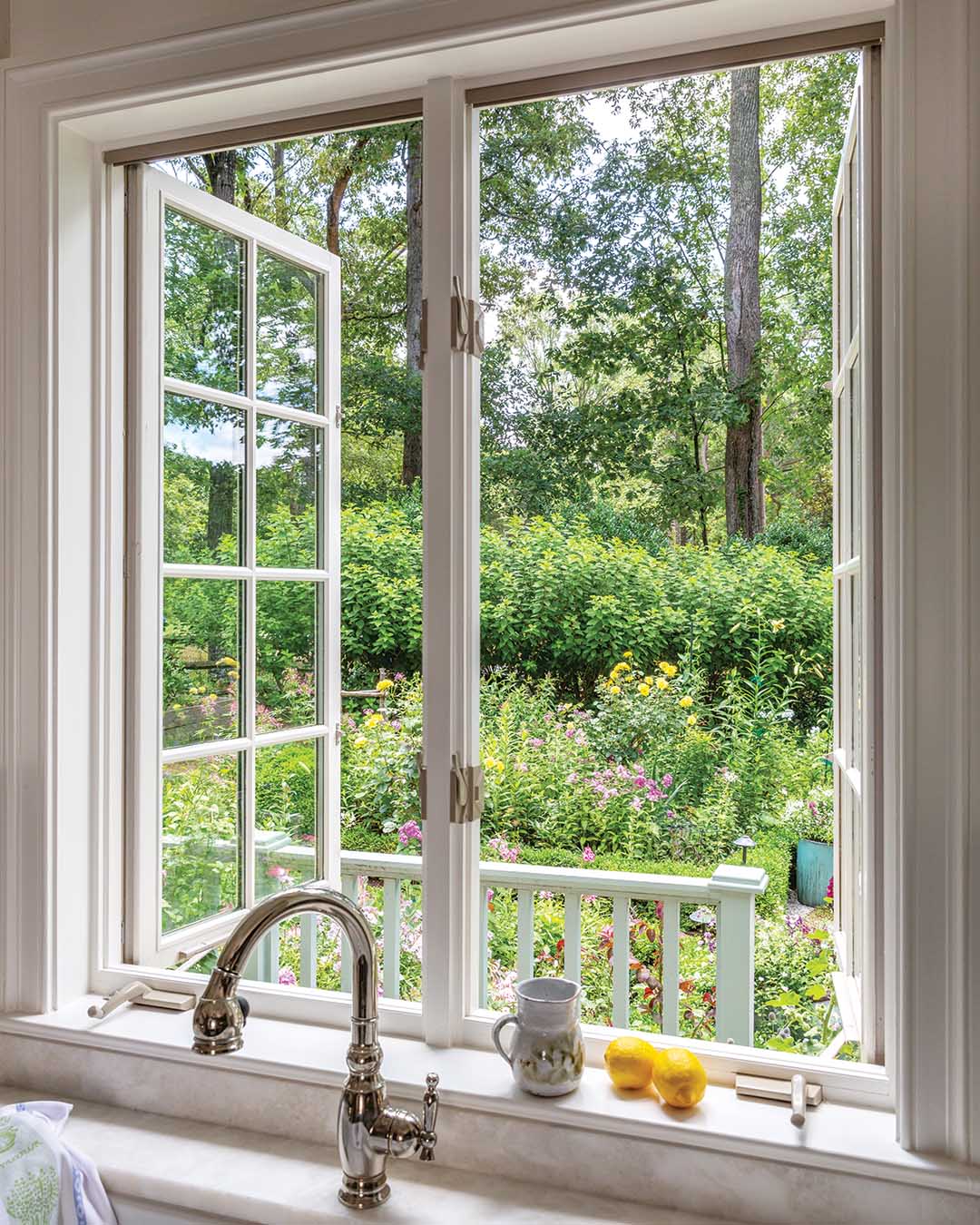
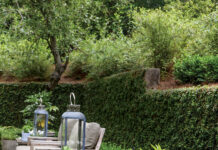
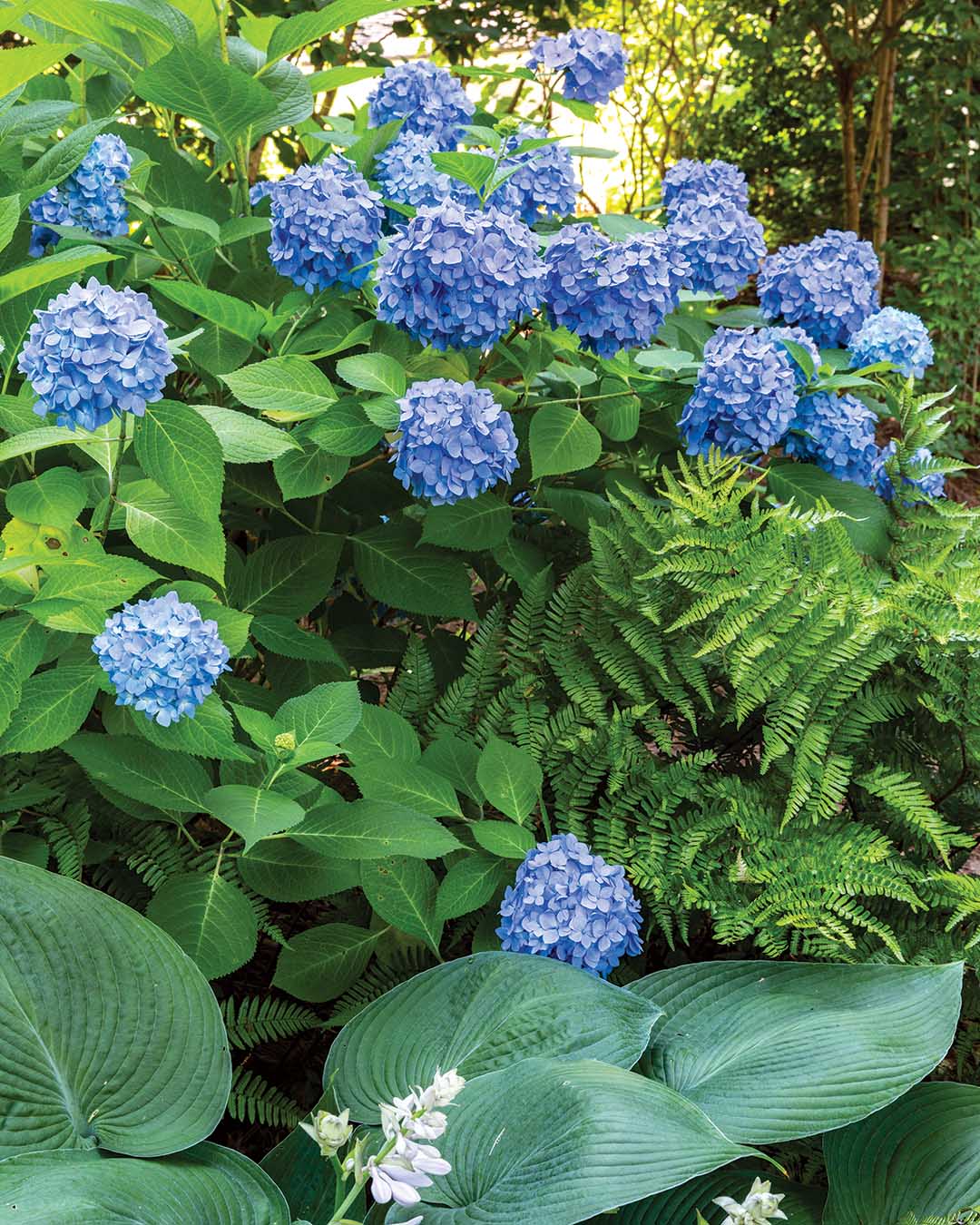
But the real show comes in the summer months. The hydrangeas and viburnum that Chip and Laura so adore are at their finest, lining the pea gravel paths edged in cobblestone, in the more casual forested section of the yard. “I like a relaxed formality,” Chip explains. “I like a garden that has a good structure. This garden is very prim and proper in the wintertime and very blowsy and full-flowing in the summertime. We’re lucky enough to have four distinct seasons here. The garden is like stage center in that house.”
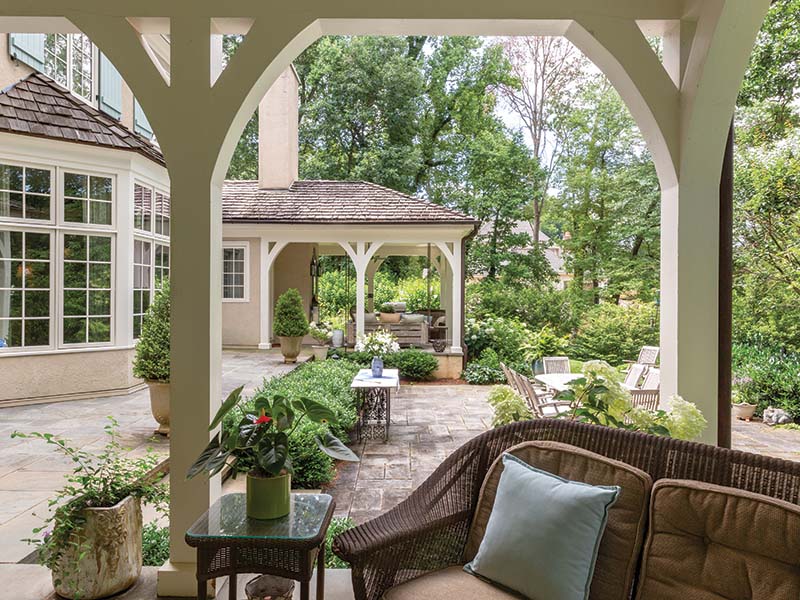
Every year, Chip and Laura sit on the patio and decide on seeds for the coming year, blending in current cultivars but preserving the past. Changes in plantings are expected and keep the process interesting, says Chip. “I hope the selections change every year. You have to be able to roll with the punches and evaluate pretty quickly what you’re having success with.”